
How much does tree removal cost?
How much does tree removal cost?
$400 – $1,200 average cost

Tree removal cost
Tree removal costs $400 to $1,200 on average, but costs can be as low as $200 to remove a small, easily accessible tree to as high as $3,000 for a large or complex removal project in challenging environmental conditions. The exact cost depends on the tree type, size, height, and condition and your location.
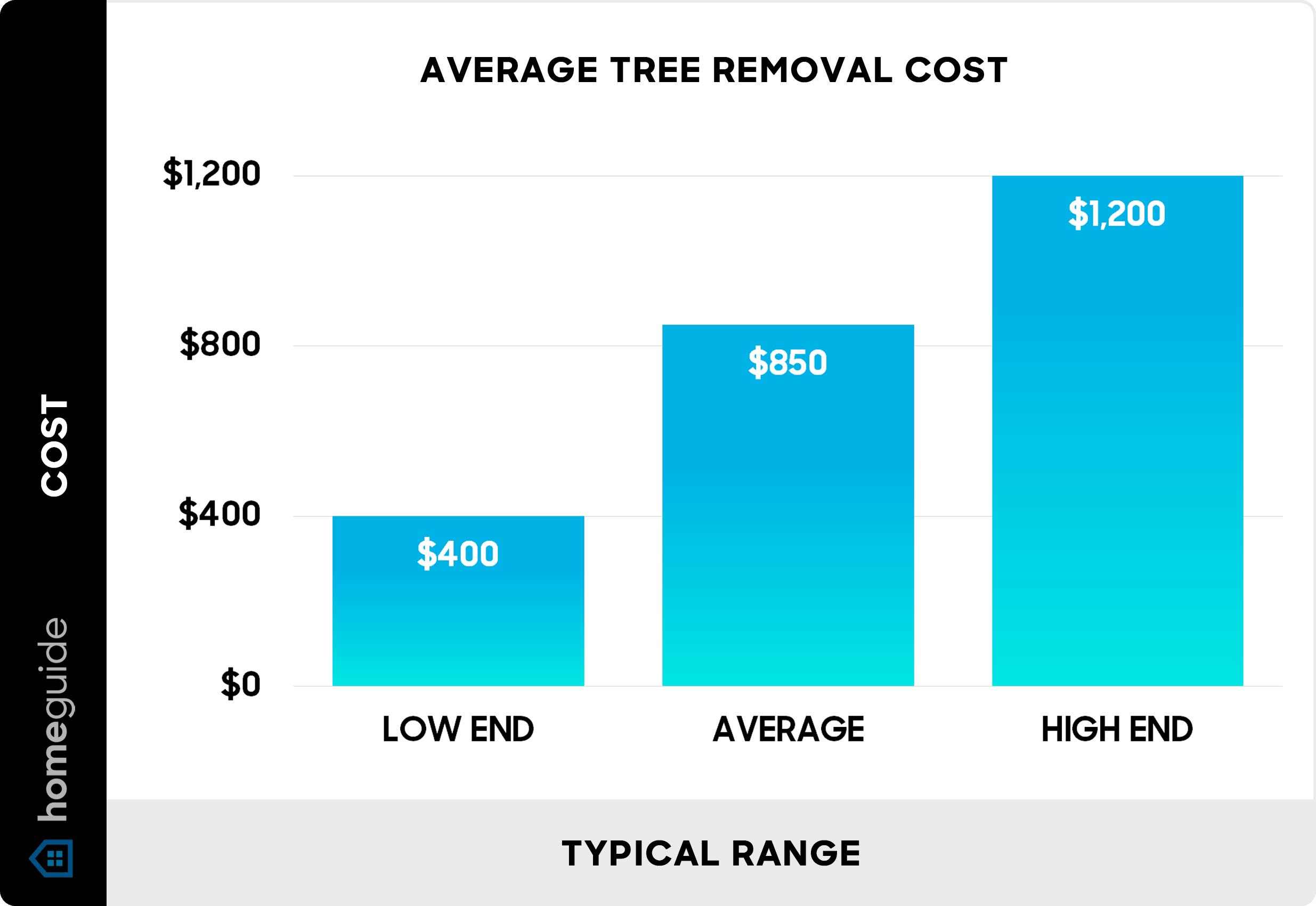
| National Average Cost | $850 |
| Minimum Cost | $200 |
| Maximum Cost | $3,000 |
| Average Range | $400 to $1,200 |
Tree removal cost calculator
Height is one of the biggest factors affecting tree removal costs. Taller trees require more specialized equipment, additional safety measures, and experienced crews, which drives up the overall cost.
| Tree height | Average removal cost |
|---|---|
| Small (under 30' tall) | $200 – $500 |
| Medium (30' – 60' tall) | $500 – $1,500 |
| Large (60' – 80' tall) | $850 – $2,000 |
| Extra-large (over 80' tall) | $1,200 – $2,500+ |
Tree felling costs by tree type
Different tree species have unique characteristics that affect the removal difficulty and cost. Some trees have softer wood that's easier to cut, while others have extensive root systems or dense wood that requires more time and effort.
The table below shows the average removal cost for several different types of trees.
| Tree type | Average removal cost |
|---|---|
| Ash | $650 – $2,000 |
| Cedar | $600 – $2,000 |
| Maple | $600 – $1,200 |
| Oak | $300 – $2,500 |
| Palm | $200 – $1,200 |
| Pine | $250 – $1,600 |
Oak and cedar trees typically cost more to remove due to their dense, heavy wood and extensive branch systems. Palm trees often cost less to remove because they're lighter and have simpler structures.
What affects the cost of tree removal?
Besides the type and height of the tree, several other factors influence your final bill for tree removal, including the tree size, condition, location, and more.
Tree size & diameter
Removing larger trees safely requires more time, effort, and tools. A tree's diameter at breast height (DBH) is a key measurement professionals use. Trees with trunks over 24 inches in diameter cost significantly more to remove than smaller ones.
Tree condition
Dead, diseased, or damaged trees can be more dangerous and unpredictable to remove. While you might expect removing a dead tree to cost less, it often costs more due to the increased safety risks. Brittle branches can fall unexpectedly, requiring extra precautions.
Fallen tree
A tree that's already down might seem easier to remove, but costs vary. If it has fallen on a structure or power lines, emergency services and repairs can increase expenses. However, removing a cleanly fallen tree in an open area typically costs less than removing a standing tree.
Job size / number of trees
Removing multiple trees at once often qualifies you for volume discounts. Tree removal companies can reduce per-tree costs by 10% to 25% when handling several trees in one visit since they're already on-site with the equipment and crew.
For large areas, like when you are clearing a lot of land to build a house, tree clearing costs $1,200 to $8,000 per acre, depending on how heavily wooded the land is.
Location
Contractors in urban settings typically charge more than in rural areas due to the limited space and increased risk. Trees near structures, power lines, or property boundaries often require more careful dismantling.
Accessibility
If equipment can't easily reach your tree, expect higher costs. Removing a tree in an open backyard costs less than removing one wedged between your house and fence. Crews may need to carry tools by hand or use specialized machinery.
Properties with steep slopes, narrow gates, or limited access roads all increase the complexity and cost of removal.
Time of year
Tree removal costs can fluctuate seasonally. Customers may see 10% to 20% higher prices in summer and fall, when demand peaks. Removal is often less expensive in winter and early spring because it's the off-season for tree services.
Fee structure
Some companies charge a flat rate based on the job details, while others charge an hourly rate. Expect to pay anywhere from $100 to $400+ per hour for tree removal, depending on your location, the complexity of the removal, and how quickly you need it done.
Emergency service
Need a hazardous tree removed immediately? Same-day or next-day tree removal often costs 2 to 3 times the standard rate. However, this service is essential when a tree poses an immediate threat to people or property.
Additional costs
Tree removal often involves related services that add to your total cost:
Stump removal costs $100 to $500+ per stump, depending on the size and method.
Tree trimming costs $400 to $900 per tree for pruning instead of full removal.
Transplanting a tree costs $300 to $1,000+ to relocate rather than remove a tree.
Wood chipping costs $50 to $100 to chip branches for mulch.
Log splitting adds $50 to $100 on average if you want to keep firewood.
Many homeowners bundle these services to save on overall costs.
Signs you should remove a tree
If you notice any of the following issues, have a certified arborist assess your tree's health and safety as soon as possible.
Dead or dying branches affecting more than 50% of the tree's canopy
Trunk damage including deep cracks, cavities, or missing bark
Root problems such as visible decay, fungus growth, or heaving soil
Leaning posture that has suddenly changed or exceeds 15 degrees
Proximity hazards where branches overhang structures or threaten power lines
Disease or pest infestation that can't be treated effectively
Construction needs requiring tree removal for building projects
Tree removal FAQs
Does homeowners insurance cover tree removal?
Tree removal is usually covered by homeowners insurance if the tree harms a covered structure. The typical coverage ranges from $500 to $1,000 per tree. However, insurance generally doesn't cover removal of trees that fall in your yard without causing property damage.
Will homeowners insurance cover preventative tree removal?
Homeowners insurance rarely covers preventative tree removal. Removing healthy trees or addressing potential hazards before damage occurs is considered routine maintenance and is the homeowner's responsibility. Insurance typically only responds after an actual loss has occurred.
Who is responsible for fallen tree removal?
Responsibility depends on where the tree was rooted and why it fell. If your tree falls on your property, you're responsible regardless of where it lands. If a neighbor's tree falls on your property due to an "act of God" like a storm, you're typically responsible. However, if their negligence contributed to the fall (like ignoring a diseased tree), they may be liable.
Can you plant a tree where a stump was removed?
Yes, but it requires proper preparation. After stump grinding, remove all wood chips and sawdust, then add fresh topsoil. Wait at least a few weeks for the ground to settle before planting. For best results, plant your new tree at least 3 to 4 feet away from the old stump location to avoid any remaining roots.

Getting estimates for tree removal service
Most reputable companies offer free estimates and will visit your property to assess the job requirements. Follow these guidelines to find a qualified tree removal service near you:
Get quotes from least three licensed and insured tree removal companies to compare pricing and services.
Check out their customer ratings and reviews on trusted sites like HomeGuide and Google.
Ask for certification from the ISA, TCIA, or other arborist associations.
Request written estimates that detail all costs, including cleanup and disposal.
Verify each company has proper liability insurance and workers' compensation coverage.
Ask for references from recent similar projects in your area.
Beware of extremely low estimates that could signal inferior quality or surprise fees.
Questions to ask tree removal professionals
Before hiring a company, ask questions! A professional company will answer these questions readily and provide documentation when requested:
Are you licensed and insured to remove trees in my area?
What's included in your quoted price for tree removal?
How will you protect my property during the removal process?
What's your cleanup and debris removal policy?
Do you have references from recent similar jobs?
What's your timeline for completing the work?
Are there any additional fees I should anticipate?
Using our proprietary cost database, in-depth research, and collaboration with industry experts, we deliver accurate, up-to-date pricing and insights you can trust, every time.